- Sep 14, 2025
Stop Overpaying Taxes: 93% of Small Businesses Do This (Here's How to Fix It)
- Aneka Winstead
- small business, taxes, women entrepreneur
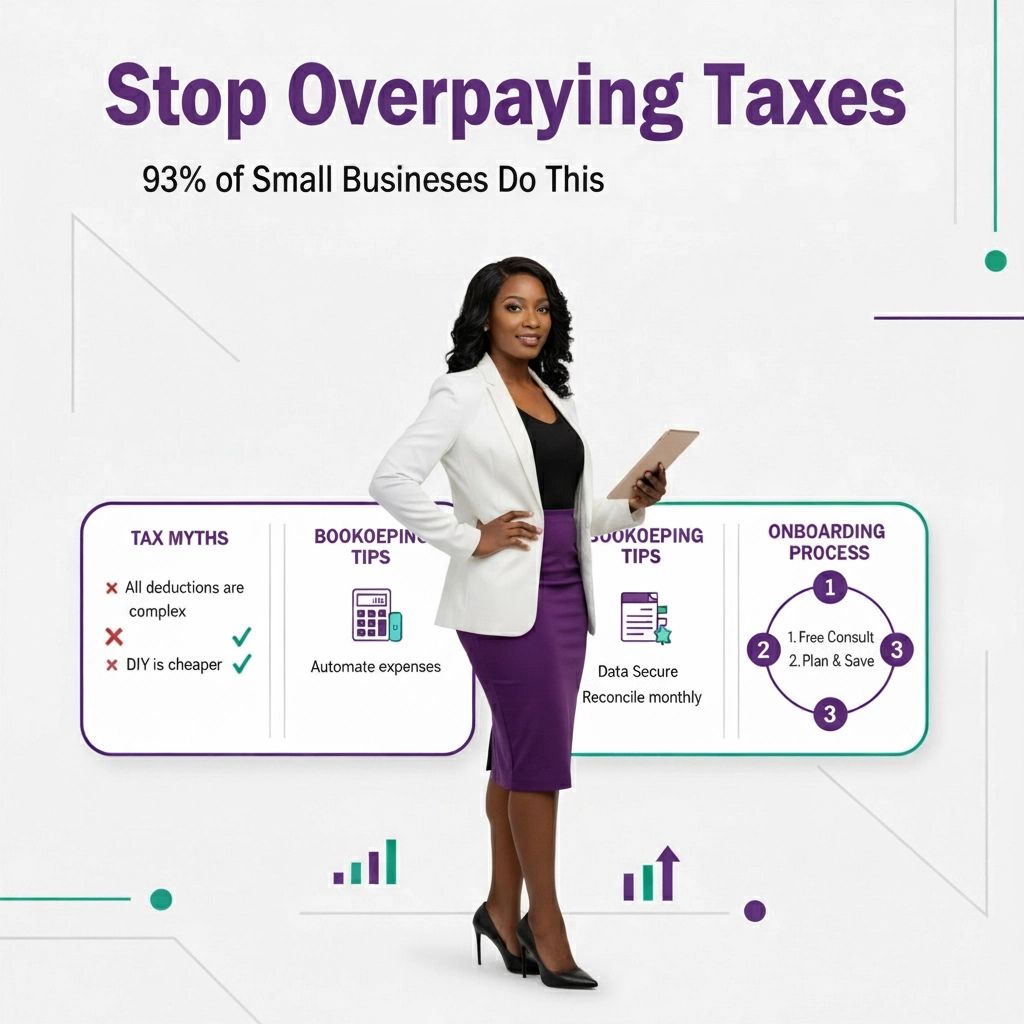
Let me start with some real talk that might sting a little: 93% of small businesses are overpaying their taxes every single year. That's not a typo. According to Forbes, nearly every business owner is literally handing over more money to the IRS than they legally owe.
Here's the kicker: while 93% of business owners rate themselves as "very or somewhat confident" in filing their taxes, only 30% actually believe they're overpaying. That confidence gap is costing the average small business $11,638 annually in unnecessary tax payments.

The Reality Check You Need Right Now
You're running a business, handling clients, managing operations, and somehow supposed to be a tax expert too? No wonder we're all overpaying. The tax code is actually written to favor small businesses, but most of us are too busy building our empires to master the system that could save us thousands.
Here's what's really happening: You're focused on growing your business (as you should be), but you're missing out on legitimate deductions and strategies because you don't have time to learn them. Meanwhile, that money you're overpaying could be reinvested back into your business, your team, or your personal wealth-building goals.
The Five Deadly Mistakes Costing You Money
1. Your Bookkeeping Game Is Weak
This is the big one. Nearly half of all small business owners don't use any bookkeeping system to track business expenses. Let me be clear: if you're not tracking your expenses properly, you're definitely overpaying your taxes.
The IRS has specifically stated that proper record-keeping helps identify deductible expenses and reduces tax liability. Translation: good books = more money in your pocket.

2. You're Mixing Business and Personal Like It's 2015
Stop using your personal account for business expenses. Stop using your business account for personal purchases. This confusion costs you deductions and creates unnecessary headaches during tax season.
Pro tip: Set up separate accounts and use them correctly from day one. Your future self will thank you.
3. You're Missing Obvious Deductions
Home office expenses, business meals, professional development, marketing costs, software subscriptions: these add up quickly. But if you're not documenting them properly throughout the year, you're leaving money on the table.
4. You Don't Know What Tax Credits You Qualify For
Tax credits are different from deductions: they're dollar-for-dollar reductions in what you owe. Many small business owners qualify for credits they never claim because they simply don't know about them.
5. You're Reactive, Not Strategic
Most business owners only think about taxes during tax season. Big mistake. Tax planning should happen year-round, with strategic decisions made quarterly to maximize your savings.

The Boss Move: What Successful Entrepreneurs Do Differently
Smart business owners understand that the tax code offers numerous loopholes and deductions specifically designed for small businesses. They're not cheating the system: they're using it exactly as intended.
Here's their playbook:
They Invest in Systems: Proper bookkeeping software, organized expense tracking, and professional guidance aren't costs: they're investments that pay for themselves many times over.
They Plan Quarterly: Instead of scrambling during tax season, they review their tax situation every quarter and make adjustments as needed.
They Document Everything: Every business expense gets recorded properly with receipts, dates, and business purposes clearly noted.
They Know When to Get Help: They recognize that trying to DIY complex tax strategies often costs more than hiring a professional who can identify savings they'd never find on their own.

Your Action Plan to Stop the Bleeding
Step 1: Audit Your Current Situation
Look at your last tax return. How much did you pay? Now consider that if you're like 93% of business owners, you probably paid too much. That's money that could be working for you instead of sitting in government accounts.
Step 2: Set Up Proper Systems Now
Open dedicated business banking accounts if you haven't already
Choose bookkeeping software and start using it consistently
Create a system for tracking and storing receipts
Step 3: Educate Yourself on Deductions
Start with the basics: home office expenses, business meals, professional development, equipment purchases, and marketing costs. Make sure you understand what qualifies and how to document it properly.
Step 4: Plan Strategically
Don't wait until December to think about taxes. Make quarterly reviews part of your business routine. Consider timing major purchases, income recognition, and other strategic decisions based on their tax implications.

The Bottom Line
Over 90% of business owners overpay their taxes every year, which means there's a systematic problem that goes far beyond individual mistakes. The tax code favors small businesses, but only those who understand how to use it properly.
You didn't start your business to become a tax expert, but you also didn't start it to overpay the government year after year. The solution isn't to become a CPA overnight: it's to implement proper systems, educate yourself on the basics, and get professional help when needed.
Remember this: Every dollar you overpay in taxes is a dollar that could be reinvested in your business, your team, or your personal wealth. When you're talking about an average overpayment of $11,638 per year, that's serious money that could fund marketing campaigns, new equipment, employee bonuses, or your retirement account.
The most successful entrepreneurs treat tax optimization as a core business strategy, not an annual chore. They understand that proper tax planning isn't about finding questionable loopholes: it's about using legitimate strategies that the tax code specifically provides for small businesses.
Stop being part of the 93%. Your business deserves better, and so do you.
Ready to stop overpaying? Check out our Small Business Tax Credits Guide to discover credits you might be missing, or explore our Business Tax Prep Checklist to ensure you're capturing every deduction you deserve.
Tag a boss friend who needs to see this: because 93% is way too high for our community to accept.